
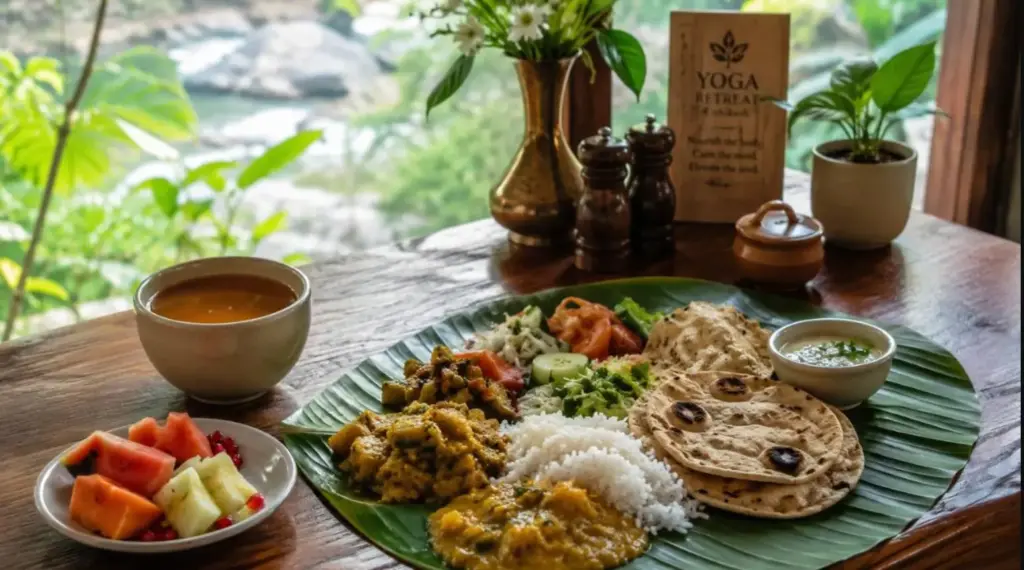
I see a yoga diet as more than a list of foods that I can eat or avoid. It is a mindful approach to eating that focuses on fresh, nourishing food, moderation and supporting the body and mind as part of a yogic lifestyle.
If I search for what is yoga diet, I will find many different definitions.
Some articles describe it as a sattvic diet.
Others present a strict list of foods that a yoga practitioner should never eat.
I think that creates unnecessary confusion.
A traditional yogic approach to food is closely associated with the idea that what I eat can influence my body, energy and state of mind. The commonly discussed framework divides foods into sattvic, rajasic and tamasic categories.
However, I would not treat every traditional food restriction as a scientifically proven health rule.
A practical yoga diet can instead help me focus on fresh foods, balanced nutrition, mindful eating and moderation while respecting the traditional philosophy behind yogic food.
What should I know about a yoga diet?
A yoga diet is a traditional approach to eating associated with yoga that generally emphasizes fresh, wholesome and minimally processed foods.
A common yogic framework describes food as sattvic, rajasic or tamasic, with sattvic foods traditionally considered supportive of clarity and balance.
Fresh fruits, vegetables, whole grains, pulses, nuts and seeds commonly fit a sattvic-style eating pattern. Some traditional versions also include dairy.
Foods such as highly processed products, fried foods, excessive sugar and stimulants are commonly restricted.
I would not consider a yoga diet a guaranteed weight-loss diet.
Its practical value comes from building a nutritious eating pattern rather than simply following a long list of restrictions.
Research also suggests that yoga practice can be associated with healthier eating habits and may support weight management, although this does not prove that a specific traditional yoga diet causes those effects.
What is a yoga diet and how does it benefit health?
A yoga diet is an eating pattern traditionally associated with yogic practices and principles.
The idea goes beyond calories.
Traditional yoga places importance on how food affects the body and mind, while modern nutrition focuses more directly on nutrients, energy intake and health outcomes.
The two perspectives can overlap, but I would not treat them as identical.
The sattvic diet is probably the eating pattern most people mean when they talk about a traditional yoga diet. It is vegetarian and emphasizes foods such as fresh produce, whole grains, legumes, nuts and seeds.
What are sattvic, rajasic and tamasic foods?
| Category | Traditional idea | Common examples |
| Sattvic | Fresh, nourishing and associated with balance | Fruits, vegetables, grains, pulses, nuts and seeds |
| Rajasic | Stimulating or strongly flavored | Very spicy, salty or stimulating foods |
| Tamasic | Heavy, stale or excessively processed | Stale foods, heavily processed foods and some fried foods |
The classification is part of the traditional framework, not a modern medical classification.
This distinction is important because some foods restricted by a strict sattvic diet can still be nutritious according to modern nutrition science.
For example, Healthline’s dietitian-reviewed analysis notes that a strict Sattvic diet excludes some nutritious foods, including certain vegetables and animal foods.
How does yoga diet and nutrition fit together?
For me, yoga diet and nutrition should not be separated.
If I choose fresh food but fail to get enough protein, iron, calcium or vitamin B12, the diet is not nutritionally complete.
That is why I would use the traditional philosophy as a foundation while still considering what my body actually needs.
Skimmable takeaway: A yoga diet is traditionally associated with mindful and wholesome eating, particularly a sattvic approach. Its food philosophy can support a healthy lifestyle, but traditional food classifications should not automatically be treated as scientific nutrition rules.
What are the benefits of adopting a yogic eating pattern?
A yogic eating pattern can encourage me to eat more whole foods and become more conscious about my food choices.
That is probably one of its most useful practical benefits.
A diet built around vegetables, fruits, legumes, whole grains, nuts and seeds can provide fibre, vitamins, minerals and other beneficial nutrients.
The Yoga Institute also incorporates Sattvik meals and yogic diet guidelines into its health and life-management programs, reflecting the continuing role of food within some traditional yoga institutions.
Can yoga itself influence eating habits?
It may.
The National Center for Complementary and Integrative Health reports that several studies have associated yoga practice with healthier eating and physical activity habits. One study found that changes in fruit and vegetable intake and physical activity were related to changes in BMI among women with obesity participating in a yoga program.
I find this more useful than claiming that one particular food automatically creates better health.
When I become more mindful through yoga, I may also become more aware of what, when and how much I eat.
Skimmable takeaway: The potential value of a yogic eating pattern comes mainly from emphasizing nutritious foods and mindful eating. Yoga practice itself may also encourage healthier lifestyle habits, although research does not prove that every traditional yogic food rule produces a specific health benefit.
What foods are included in a traditional yoga diet?
A traditional yoga diet generally emphasizes fresh and minimally processed foods.
Which fruits and vegetables can I eat?
Common choices include:
- Apples
- Bananas
- Papaya
- Guava
- Mango
- Melons
- Carrots
- Spinach
- Pumpkin
- Broccoli
- Cauliflower
- Peas
- Other fresh seasonal vegetables
The emphasis is generally on fresh food rather than heavily processed alternatives.
Which grains and pulses fit a yoga diet?
Rice, oats, barley, millet, quinoa and other whole grains can form the carbohydrate base of meals.
Pulses and legumes such as moong dal, masoor dal, chickpeas and rajma are particularly useful because they also contribute protein and fibre.
What about nuts and seeds?
Nuts and seeds can provide healthy fats, protein and minerals.
I can include:
- Almonds
- Walnuts
- Cashews
- Pumpkin seeds
- Sunflower seeds
- Sesame seeds
- Flaxseeds
Portion size still matters because nuts and seeds are energy-dense.
Is dairy included?
Many traditional Sattvic diets permit high-quality dairy in moderation.
Milk, curd and paneer may therefore appear in a traditional Indian interpretation.
However, a person who does not consume dairy can build a different version of the diet using suitable plant-based foods.
Skimmable takeaway: A traditional yoga diet can be built around fresh fruits, vegetables, grains, pulses, legumes, nuts and seeds, with dairy included in many versions. The exact food list varies according to the tradition being followed.
What foods should I avoid on a traditional yoga diet?
This is where many explanations of the yoga diet become too rigid.
A strict Sattvic approach generally avoids foods considered rajasic or tamasic.
These may include:
- Deep-fried foods
- Highly processed foods
- Excessive added sugar
- Fast food
- Refined foods
- Very spicy foods
- Alcohol
- Caffeinated beverages
- Meat
- Fish
- Eggs
- Onion
- Garlic
- Stale food
Healthline’s review describes these restrictions while also pointing out that some excluded foods are nutritious from a modern nutrition perspective.
That is why I would separate traditional practice from nutritional necessity.
For example, avoiding fried food and excessive added sugar has an obvious place in a generally healthy eating pattern.
Avoiding onion or garlic is different.
Those restrictions come from particular traditional interpretations rather than from evidence that these foods are inherently unhealthy.
Skimmable takeaway: A strict traditional yoga diet commonly limits processed, fried, highly stimulating and certain animal or plant foods. However, not every traditional restriction is a nutritional requirement, so I would understand the reason behind each restriction before adopting it.
Can a yoga diet help me lose weight?
A yoga diet can support weight management, but I would not call it a guaranteed yoga diet to lose weight.
Weight loss depends on the overall balance between energy intake and expenditure, along with food quality, activity, sleep and individual factors.
A diet containing more vegetables, fruits, pulses and whole foods and fewer highly processed foods can make it easier to manage overall calorie intake.
Yoga may also contribute to weight management.
NCCIH reports that a 2022 review of 22 studies involving 1,178 participants found reductions in body weight, BMI, body fat and waist size among people with overweight or obesity participating in yoga interventions.
But I would not promise that following a sattvic food list will make someone lose a particular number of kilograms.
What matters more than the label?
If my goal is weight loss, I would pay attention to:
- Portion sizes
- Protein intake
- Vegetable intake
- Fibre
- Added sugar
- Fried food
- Total calorie intake
- Physical activity
Even foods traditionally considered healthy can contribute substantial calories when eaten in large quantities.
For example, excessive nuts, ghee, dried fruit or large portions of rice can make a diet calorie-dense.
Skimmable takeaway: A yoga diet may support weight management because it can emphasize whole foods and reduce highly processed foods, while yoga itself may support weight-control efforts. However, weight loss is not guaranteed simply because a diet is called yogic or sattvic.
What does a balanced yoga diet chart look like?
A yoga diet chart should not simply divide foods into “allowed” and “not allowed.”
I would use it to create balanced meals.
| Meal | Example |
| Breakfast | Vegetable poha with curd and fruit |
| Mid-morning | Fruit and a small portion of nuts |
| Lunch | Rice or roti with dal, vegetables and curd |
| Evening | Roasted chana or makhana |
| Dinner | Moong khichdi with vegetables |
| Optional | Milk or suitable plant-based alternative |
This is an example rather than a prescribed diet.
The appropriate portion depends on age, activity, body size, health needs and personal goals.
Skimmable takeaway: A useful yoga diet chart should combine carbohydrates, protein, vegetables, fruits and healthy fats rather than simply restricting foods. I would adapt portions and food choices to individual nutritional requirements.
What should a yoga diet meal plan include?
A practical yoga diet meal plan does not need expensive ingredients or complicated recipes.
Indian foods such as dal, rice, roti, vegetables, fruits, curd, legumes and millets can provide a strong foundation.
| Day | Breakfast | Lunch | Dinner |
| Monday | Poha + curd | Dal + rice + vegetables | Moong khichdi |
| Tuesday | Oats + fruit + nuts | Roti + dal + sabzi | Vegetable pulao + curd |
| Wednesday | Upma + vegetables | Rajma + rice + salad | Dal + roti + vegetables |
| Thursday | Idli + sambar | Chana + roti + vegetables | Khichdi + curd |
| Friday | Dalia + fruit | Dal + rice + vegetables | Roti + paneer/tofu + vegetables |
| Saturday | Poha + sprouts | Khichdi + vegetables | Dal + roti + sabzi |
| Sunday | Vegetable upma + fruit | Chole + rice + vegetables | Light dal and vegetable meal |
I would treat this as a framework rather than a rigid weekly prescription.
The important thing is variety and nutritional balance.
Skimmable takeaway: A yoga diet meal plan can use ordinary Indian foods to provide carbohydrates, protein, fibre and micronutrients. The diet does not need to be complicated to follow a yogic eating philosophy.
How does yoga diet and its impact on health depend on nutrition?
The health impact depends heavily on how the diet is constructed.
A plant-focused eating pattern can be rich in nutrients, but a restrictive version can also create nutritional gaps.
This is especially important when someone removes several animal foods at the same time.
Which nutrients deserve attention?
I would pay attention to:
- Protein
- Vitamin B12
- Iron
- Calcium
- Vitamin D
- Omega-3 fatty acids
- Zinc
Healthline’s review specifically highlights potential nutritional concerns when a strict Sattvic diet excludes animal foods and recommends paying attention to nutrients such as vitamin B12 and omega-3 fats.
This is why I would never assume that a food is automatically better simply because it is traditional.
A healthy yoga diet still needs to meet nutritional requirements.
Skimmable takeaway: The impact of a yoga diet on health depends on whether the overall diet is nutritionally adequate. A restrictive vegetarian or vegan version requires particular attention to protein, B12, iron, calcium, vitamin D and omega-3 fats.
What kind of oils are best for a yoga diet?
I would not say that one cooking oil is universally best for everyone.
Sesame, groundnut, mustard, coconut and olive oil can all have a place depending on the cooking method, dietary pattern and individual preference.
The quantity matters just as much as the type.
Traditional yogic approaches may include certain oils and ghee, but I would avoid treating any one oil as a special “yoga oil.”
Skimmable takeaway: The best oil for a yoga diet depends on the overall diet and cooking needs. I would focus on choosing an appropriate oil and using it moderately rather than searching for one perfect oil.
Is dairy permitted in a classic yoga diet?
Yes, dairy is permitted in many traditional Sattvic diets.
Milk, curd and other selected dairy foods are commonly included in traditional versions.
However, dairy is not essential for practicing yoga.
Someone following a vegan lifestyle can choose plant-based alternatives, but should ensure adequate protein, calcium, vitamin B12 and other nutrients.
Skimmable takeaway: Dairy can be part of a classic Sattvic-style yoga diet, but a dairy-free version is possible. The important point is replacing the nutrients rather than simply removing dairy.
What are the best gluten-free options for a yogic diet?
A yoga diet does not inherently require gluten avoidance.
If I need to follow a gluten-free diet, however, I can use foods such as:
- Rice
- Millets
- Buckwheat
- Quinoa
- Amaranth
- Lentils
- Beans
- Fruits
- Vegetables
- Nuts
- Seeds
For people with medically necessary gluten avoidance, packaged products also require careful label checking.
Skimmable takeaway: Rice, millets, buckwheat, quinoa, amaranth, pulses, fruits and vegetables can fit comfortably into a gluten-free yogic eating pattern. Gluten-free eating is a separate dietary requirement rather than a basic rule of yoga.
What is the Hatha yoga diet?
There is no single universally standardized Hatha yoga diet that every Hatha practitioner must follow.
Hatha Yoga is a yoga tradition and practice, while a yogic diet refers to principles surrounding food and eating.
Modern Hatha classes do not automatically require a strict Sattvic diet.
I would instead focus on eating in a way that supports energy, digestion, concentration and recovery.
Yoga itself is broader than physical postures. NCCIH describes classical yoga as including physical practices alongside breathing, meditation and other elements.
Skimmable takeaway: A Hatha yoga diet is not a separate standardized diet. Some Hatha practitioners may follow traditional Sattvic principles, but practicing modern Hatha Yoga does not automatically require a strict food regimen.
What vegetarian protein sources work well in a yoga diet?
Protein deserves particular attention in a vegetarian yoga diet.
Useful sources include:
| Protein source | Practical use |
| Moong dal | Dal and khichdi |
| Masoor dal | Dal and soups |
| Chickpeas | Chana and salads |
| Rajma | Rajma with rice |
| Tofu | Curries and stir-fries |
| Paneer | Main meals |
| Curd | Breakfast or meals |
| Soy | High-protein meals |
| Nuts and seeds | Snacks and additions |
I would not assume that a yoga practitioner needs a protein powder simply because they practice yoga.
A protein supplement is a convenience option, not a requirement.
If I were reviewing a vegetarian protein powder, I would judge it on protein per serving, ingredients, added sugar, digestibility, dietary compatibility and quality testing before giving it a rating.
Skimmable takeaway: Dal, beans, soy, tofu, paneer, curd, nuts and seeds can provide protein in a vegetarian yoga diet. Protein powders may be useful for convenience but are not an essential part of a yogic diet.
What ready-to-eat healthy snacks suit a yogic lifestyle?
I would keep snacks simple rather than relying on products marketed as “yoga foods.”
Good choices include:
- Fresh fruit
- Unsalted nuts
- Roasted chana
- Makhana
- Plain curd
- Sprouts
- Fruit with nuts
- Homemade snacks
A packaged snack is not automatically healthy because the front of the packet uses words such as natural, organic or wellness.
I would check the ingredient list and nutrition label.
Skimmable takeaway: Simple foods such as fruit, roasted chana, makhana, nuts, curd and sprouts can work well as ready-to-eat snacks. I would judge packaged products by their ingredients and nutritional value rather than their marketing.
FAQs About Yoga Diet
Is a yoga diet the same as a vegetarian diet?
No. A yoga diet and a vegetarian diet are not exactly the same.
A vegetarian diet describes what someone does not eat, while a yogic diet also considers the traditional qualities and preparation of food.
A strict Sattvic diet is generally vegetarian, but not every vegetarian diet is a yogic diet.
Can I follow a yoga diet if I am not vegetarian?
Yes, I can adopt some yogic eating principles without following a strict vegetarian version.
I can increase fruits, vegetables, whole grains and legumes while reducing highly processed and fried foods.
The stricter traditional approach may exclude meat, fish and eggs, but modern interpretations vary.
Are eggs allowed in a traditional yoga diet?
Strict Sattvic diets generally exclude eggs.
This is a traditional dietary rule rather than evidence that eggs are inherently unhealthy.
If I avoid eggs, I should make sure I get enough protein and other nutrients from suitable alternatives.
Do I have to stop eating onion and garlic?
No, not unless I choose to follow a tradition that specifically restricts them.
Some Sattvic traditions classify onion and garlic as foods to avoid, while modern nutrition recognizes them as nutritious foods.
This is a good example of why I would distinguish spiritual dietary principles from evidence-based nutrition.
Can I eat rice and roti on a yoga diet?
Yes, both rice and roti can be included.
I would focus on the overall meal.
For example, rice combined with dal and vegetables provides a more balanced meal than eating a large portion of rice alone.
What should I eat before yoga?
I would choose food according to how much time I have before practice and how my body responds.
A light snack such as fruit may work before a short session, while a larger meal needs more time for digestion.
I would avoid experimenting with unfamiliar heavy foods immediately before yoga.
What should I eat after yoga?
A balanced meal containing protein, carbohydrates and vegetables is a practical choice.
Dal with rice and vegetables or roti with paneer or tofu and vegetables are simple Indian examples.
The appropriate amount depends on the intensity of the practice and my overall dietary needs.
Is a yoga diet suitable for beginners?
Yes, a flexible version can be suitable for beginners.
I would not start by eliminating every food that a strict Sattvic diet restricts.
I would first improve the quality and balance of my meals.
Is a yoga diet good for weight loss?
It can support weight management, but it is not automatically a weight-loss diet.
A nutritious diet with appropriate portions and regular physical activity matters more than the label.
Research suggests yoga may also support weight management in people with overweight or obesity.
Is coffee allowed on a traditional yoga diet?
Strict Sattvic diets generally avoid coffee and other caffeinated beverages.
However, this is a traditional restriction rather than a universal nutrition rule.
Someone choosing a yogic lifestyle can decide how closely they want to follow that traditional principle.
Is a yoga diet the same as an Ayurvedic diet?
No, they overlap but are not identical.
Yoga and Ayurveda developed within related Indian philosophical traditions, but they are different systems with different purposes and frameworks.
I would therefore avoid using “yoga diet” and “Ayurvedic diet” as interchangeable terms.
Can I follow a yoga diet without dairy?
Yes, I can follow a dairy-free version of a yogic diet.
I just need to replace nutrients that dairy normally provides.
Fortified plant milk, tofu, legumes, seeds and other suitable foods can help build a nutritionally adequate dairy-free pattern.
Conclusion
When I answer what is yoga diet, I would not describe it simply as a list of foods that I can eat and foods that I cannot eat.
A traditional yoga diet is connected with the broader yogic idea of living consciously and choosing food that supports the body and mind.
The Sattvic approach gives this philosophy a recognizable food framework, with an emphasis on fresh and wholesome foods and restrictions on many processed, stimulating or traditionally unsuitable foods.
But I also think modern nutrition has an important role.
I still need enough protein, fibre, healthy fats, vitamins and minerals.
I should not remove nutritious foods simply because a strict dietary interpretation labels them differently.
For me, the most useful yoga diet is therefore one that combines mindful eating, traditional wisdom and nutritional balance.
That approach makes the idea of a yogic diet much more practical for everyday life.