
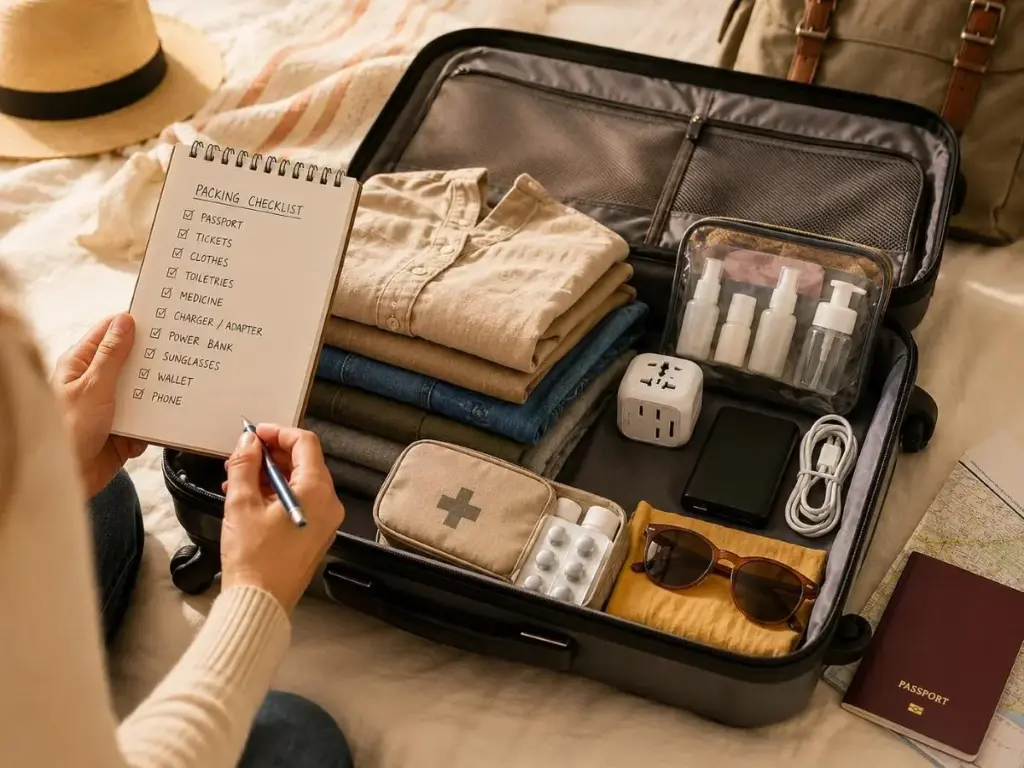
The right travel packing essentials are not about filling my suitcase to the limit. I pack according to my destination, trip duration, weather, activities and mode of travel, and I keep the things I cannot afford to lose within easy reach.
Packing often looks simple until I actually start doing it. I have faced the familiar problem of having a suitcase full of clothes but still wondering whether I forgot something important. I have also learned that carrying more does not necessarily make a trip easier. It can mean heavier luggage, less space and more things to organize.
That is why my approach to travel packing essentials is practical rather than excessive. I first identify what I genuinely need, then adjust it according to the journey. Current travel-packing content also increasingly follows this approach: instead of one enormous generic list, useful packing advice separates the essentials from destination-, climate- and trip-specific items. (Travel + Leisure)
Before packing, learn how to create a practical travel plan for your journey.
TL;DR
If I had to reduce my entire packing routine to the essentials, I would prioritize travel documents, money, medicines, phone and charger, appropriate clothes, toiletries, comfortable footwear, weather-specific items and necessary electronics.
I keep important documents, medicines, valuables and essential electronics accessible rather than buried inside my main luggage. Before flying, I also check the current baggage and security rules of the airline I am using because allowances and restrictions can vary.
How Do I Decide What to Pack for a Trip?
I decide what to pack by looking at five things: destination, duration, weather, activities and transportation. This simple process prevents me from packing for situations that are unlikely to happen.
For example, a three-day city trip does not need the same luggage as a 10-day winter holiday. A train journey also requires different accessible items from a short flight.
My five-question packing test
| Question | Why I ask it |
| Where am I going? | Determines climate, culture and available facilities |
| How long am I staying? | Determines clothing quantity |
| What will the weather be? | Determines layers and footwear |
| What will I actually do? | Determines activity-specific items |
| How am I travelling? | Determines what I need during transit |
I also check the forecast close to departure instead of relying on what I saw when I first booked the trip.
This is one of the travel packing tips I find most useful because weather can completely change what belongs in my suitcase.
I decide what to pack based on destination, duration, weather, activities and transport instead of using the same checklist for every journey.
What Are the Essential Items I Should Pack for Every Trip?
My basic travel packing essentials fall into a few categories: documents, money, clothing, toiletries, health, electronics and footwear.
My core packing checklist
| Category | Essentials |
| Documents | ID/passport, tickets, bookings, permits if required |
| Money | Cash, cards and backup payment option |
| Clothing | Tops, bottoms, underwear, socks and sleepwear |
| Toiletries | Toothbrush, toothpaste, deodorant and personal-care items |
| Health | Regular medicines and basic first-aid items |
| Electronics | Phone, charger, power bank and earphones |
| Footwear | Comfortable walking shoes and activity-specific footwear |
| Weather | Jacket, rainwear, hat or winter layers |
| Organization | Toiletry pouch, laundry bag and useful organizers |
I separate essential documents from the rest of my luggage. For international travel, I also keep copies of important documents where appropriate.
For air travel, I check the current rules for batteries and electronics before packing. IATA advises passengers to carry spare lithium batteries in carry-on baggage rather than checked baggage. (Travel + Leisure)
My universal packing list starts with documents, money, medicines, clothing, toiletries, electronics and comfortable footwear, with destination-specific items added afterward.
How Can I Pack Clothes Without Overpacking?
I pack outfits rather than individual pieces of clothing. This small change has made a big difference to how much I carry.
Instead of asking, “How many shirts can I fit?”, I ask, “How many outfits can I create from these clothes?”
I choose clothes that can do more than one job
I prefer:
- Tops that work with multiple bottoms
- Neutral or easily matched colours
- Comfortable trousers or jeans
- Lightweight layers
- Clothes suitable for more than one activity
- Fabrics that are easy to wash and dry
I also avoid taking several pairs of shoes unless my itinerary genuinely requires them.
For longer trips, laundry is another way I reduce luggage. I would rather wash a few versatile clothes than carry an entire wardrobe.
Current packing advice from travel publications similarly emphasizes versatile clothing and mix-and-match combinations as a way to reduce unnecessary luggage. (Women’s Health)
I avoid overpacking by building multiple outfits from versatile clothes, limiting footwear and using laundry when it makes sense.
What Should I Include in a Travel Packing List for Women?
A travel packing list for women should be based on personal requirements rather than a generic list of things every woman supposedly needs.
My practical essentials would include comfortable clothing, innerwear, suitable footwear, personal hygiene products, skincare, hair-care products I actually use, medicines and weather-specific clothing.
Useful items to consider
- Comfortable everyday clothing
- Innerwear
- Sleepwear
- Walking shoes
- Personal hygiene products
- Menstrual products if required
- Skincare essentials
- Hair-care products
- Sunglasses
- Small day bag
- Medicines
- Phone and charger
- Weather-appropriate layers
I would not pack something simply because it appears on a generic checklist. If I know I will not use it, it is not an essential.
For flights, I also check the current liquid restrictions before packing toiletries because security requirements can affect what I can carry in cabin baggage.
A practical women’s packing list focuses on personal hygiene, comfortable clothing, footwear, health requirements and the specific destination rather than unnecessary extras.
What Should I Include in a Travel Packing List for Men?
My travel packing list for men follows the same principle: I pack according to the trip rather than assuming every man needs the same things.
My basic list includes
- T-shirts or shirts
- Trousers, jeans or shorts
- Underwear
- Socks
- Sleepwear
- Comfortable shoes
- Jacket or outer layer
- Toothbrush and toothpaste
- Deodorant
- Grooming essentials
- Medicines
- Sunglasses
- Phone and charger
For longer journeys, I prefer versatile clothes that I can combine and reuse.
The goal is not to create a different outfit for every photograph. It is to have enough comfortable clothing for the activities I have actually planned.
My men’s packing list focuses on versatile clothing, grooming, footwear, medicines and electronics, with quantities determined by the trip rather than gender.
What Should I Pack for a 10-Day Trip?
A 10 days travel packing list does not mean I need 10 complete outfits.
My starting point would usually be:
| Item | Practical starting point |
| Tops/shirts | 5–7 |
| Bottoms | 3–4 |
| Underwear | 8–10 |
| Socks | 5–7 pairs |
| Sleepwear | 1–2 sets |
| Light jacket/layer | 1 |
| Main walking shoes | 1 pair |
| Toiletries | Travel-sized |
| Laundry option | 1 small solution |
These quantities are not rules. I change them depending on whether I have access to laundry and what I will be doing.
A 10-day beach trip might need swimwear and lightweight clothes, while a 10-day winter trip could require thermals, sweaters and a heavier outer layer.
For ten days, I pack versatile clothing and plan around laundry rather than carrying ten separate outfits.
What Should Be on My Long Travel Packing List?
My long travel packing list gives extra attention to comfort and accessibility.
If I am spending several hours on a train, flight or road journey, I keep these items in a smaller bag:
- ID and tickets
- Phone
- Charger
- Power bank
- Medicines
- Water
- Snacks
- Tissues or wet wipes
- Earphones
- Light jacket
- Basic toiletries
- One change of clothes
- Something to read or watch
I do not want to open my main suitcase every time I need my charger or water.
For flights, I also check the airline’s current baggage requirements before departure rather than assuming that an old packing list is still accurate.
Long journeys require an accessible bag containing documents, medicines, electronics, food, water, comfort items and a change of clothes.
What Should Be on My Winter Travel Packing List?
My winter travel packing list is based on layering rather than carrying several bulky sweaters.
My winter travel packing checklist
- Base-layer clothing
- Sweater or fleece
- Warm outer jacket
- Warm socks
- Gloves
- Beanie
- Scarf
- Comfortable weather-resistant footwear
- Moisturizer
- Lip balm
- Sunglasses
- Necessary medicines
Why do I prefer layers?
Layers give me flexibility.
I can wear a base layer when it is cold, add an insulating layer when the temperature drops and use an outer layer for wind, rain or snow.
This is more useful than carrying several thick sweaters that all perform roughly the same function.
My winter travel packing checklist also changes according to the destination. A mild winter and a snow-covered mountain destination cannot be packed for in exactly the same way.
My winter packing strategy uses base layers, insulating layers and weather protection so I can adapt to temperature changes without carrying unnecessary bulk.
Which Travel Packing Accessories Are Actually Worth Carrying?
I prefer travel packing accessories that solve a genuine problem.
The accessories I find useful
| Accessory | Why I use it |
| Packing cubes | Keep clothing categories separated |
| Toiletry pouch | Prevent toiletries from spreading |
| Shoe bags | Keep footwear away from clothes |
| Cable organizer | Keep chargers together |
| Laundry bag | Separate used clothes |
| Document pouch | Keep important papers organized |
| Luggage tag | Makes luggage easier to identify |
| Foldable bag | Useful for extra items or shopping |
I do not buy every travel gadget marketed as a must-have. An accessory has to save space, improve organization or make the journey more convenient before I give it room in my luggage.
The best travel packing accessories are simple organizers that improve accessibility, hygiene and luggage management without adding unnecessary weight.
What Should I Consider When Packing Food for Train Travel?
When packing food for train travel, I choose food that is portable, easy to eat and unlikely to leak or spoil quickly.
Foods I would consider
- Sandwiches or wraps
- Biscuits or crackers
- Dry snacks
- Fresh fruit that travels well
- Nuts and seeds where suitable
- Simple homemade snacks
- Water
I also carry tissues, wet wipes and a small waste bag.
For longer journeys, I prefer smaller portions instead of one large container. It makes eating easier and keeps the rest of the food packed away.
I avoid food that is excessively messy or difficult to store because the goal is to make the journey easier, not create another problem to manage.
When packing food for train travel, I choose portable and easy-to-eat options and carry water, wipes and a small waste bag for convenience.
How Do I Organize My Luggage So Everything Is Easy to Find?
I organize my luggage according to category, weight and accessibility.
I generally place heavier items lower in the suitcase, keep clothes grouped together and use separate pouches for toiletries and electronics.
My simple organization system
Bottom: Shoes and heavier items.
Middle: Main clothing.
Separate pouch: Toiletries.
Organizer: Chargers and cables.
Laundry bag: Used clothes.
Accessible section: Documents and frequently needed items.
I also keep one change of clothes accessible during longer journeys. If my luggage is delayed, I do not want to discover that every piece of clothing I own is inside the missing suitcase.
I organize luggage by category and accessibility so I can find documents, toiletries, electronics and clothing without unpacking everything.
What Packing Mistakes Do I Try to Avoid?
The biggest mistakes I try to avoid are surprisingly simple.
I do not pack without checking the weather
The forecast can completely change what I need.
I do not carry unnecessary footwear
Shoes take up space and add weight.
I do not pack clothes without planning outfits
A suitcase can be full without containing enough useful combinations.
I do not leave medicines until the last minute
Necessary medication goes on my checklist early.
I do not put everything in checked luggage
Documents, valuables, essential medication and important electronics stay accessible when I fly.
I do not fill every corner of my suitcase
Leaving some space gives me flexibility during the trip.
I avoid overpacking, excessive footwear, weather mistakes, forgotten medicines and inaccessible essentials because these create more problems than they solve.
Once your packing is sorted, you can also follow these budget travel advice tips to reduce your overall travel expenses
What Do I Check Before Leaving Home?
Before I leave, I do one final check of the things that would be most difficult to replace.
My final check
| Category | Final check |
| Documents | ID/passport, tickets and bookings |
| Money | Wallet, cards and cash |
| Health | Medicines and necessary health items |
| Electronics | Phone, charger and power bank |
| Clothing | Planned outfits and weather layers |
| Toiletries | Personal-care essentials |
| Footwear | Comfortable main pair |
| Travel-specific | Food, rainwear, winter gear or activity equipment |
I also check the weather and departure details one final time.
This takes only a few minutes, but it is one of the most useful pieces of travel packing advice I can give because it catches the things I am most likely to regret forgetting.
My final check focuses on documents, money, medicines, electronics, clothing and destination-specific items that would be difficult to replace during the journey.
Learn how I plan my trips using smart tools, practical research, and simple strategies to make every journey easier, smoother, and less stressful.
Frequently Asked Questions About Travel Packing Essentials
What are the 10 most important things to pack for travel?
The 10 most important things are identification documents, money, phone, charger, medicines, suitable clothing, toiletries, comfortable footwear, weather protection and travel bookings.
These are the things I prioritize because forgetting them can create more trouble than forgetting a minor accessory.
What should I pack first when traveling?
I pack documents, medicines, money, essential electronics and destination-specific necessities first.
I find this better than starting with clothes because clothing is easy to remember while important documents and medication are easier to overlook.
How do I pack smart for a seven-day trip?
I pack smart by planning outfits, choosing versatile clothing, limiting footwear and considering laundry.
I would rather carry a few pieces that work together than seven completely different outfits.
What should I not forget when packing for a trip?
I should not forget identification, money, medicines, phone, charger, suitable clothes and destination-specific essentials.
I recommend writing these down instead of trusting memory, particularly when packing in a hurry.
What is the 5-4-3-2-1 packing rule?
The 5-4-3-2-1 method is a minimalist packing formula that commonly suggests five tops, four bottoms, three pairs of shoes, two additional layers or special-purpose items and one dressier outfit.
I treat it as a framework rather than a strict rule because a winter holiday, business trip and beach vacation require different things.
How can I pack light for travel?
I pack light by reducing duplicates, choosing versatile clothing, limiting shoes and avoiding unnecessary “just in case” items.
I also ask myself whether I will realistically use something before giving it space in my suitcase.
What should I keep in my travel bag for emergencies?
I keep essential medication, identification, emergency contacts, payment backup, phone, charger and basic personal-care items.
For long journeys, I also keep a change of clothes and a few snacks accessible.
How early should I start packing for a trip?
I start planning my packing several days before departure and physically pack closer to the trip.
That gives me enough time to check the weather, wash clothes, find missing items and avoid last-minute decisions.
How can I prevent overpacking?
I prevent overpacking by laying everything out before it goes into the suitcase and removing duplicates.
When I can see everything together, it becomes much easier to notice that I have packed more clothes, shoes or accessories than I actually need.
What should I keep in my personal travel bag?
I keep documents, wallet, phone, charger, medicines, important electronics, bookings, water and basic personal items in my personal bag.
These are the things I want beside me during transit rather than buried inside my main luggage.
Final Thoughts
I no longer think of packing as trying to fit as many things as possible into a suitcase. For me, good packing means making the right decisions before I leave home.
The most useful travel and packing tips are often the simplest: check the weather, plan outfits, carry only the footwear I need, keep important items accessible and avoid packing for situations that are unlikely to happen.
Whether I am preparing a travel packing list for women, a travel packing list for men, a travel winter packing list, or a long travel packing list, the principle remains the same.
I pack for the journey I am actually taking—not for every possible journey I could imagine.
That mindset keeps my luggage lighter, my essentials easier to find and the start of my trip much less stressful.